§Patent Search & Research
An invalidity search that reads past the patent databases
A deep prior-art hunt against a specific patent's claims, for owners checking their own asset, buyers in diligence, and companies facing a patent. You get references and technical mapping. Conclusions stay with counsel.
- Typical turnaround
- 2–3 weeks
- Best for
- Owners before a sale or assertion, buyers in diligence, and companies facing a patent
- You receive
- Ranked references, claim-element charts, a non-patent literature file, and the audit trail
- Delivered to
- You, or your patent attorney or litigation counsel
§ 01Deliverables
What you receive
References and technical mapping, documented well enough for counsel to rely on the trail.
Ranked references
The strongest earlier documents we find, ranked by how much of each target claim they describe, with every publication date checked against the patent's priority date.
Claim-element charts
Each target claim split into elements, with the matching passages, figures, and page cites from each reference beside them. Technical mapping only.
Non-patent literature file
Theses, product manuals, archived web pages, conference papers, and standards documents, each with the date evidence we found and where it came from.
Foreign-language sources
Patents, utility models, and literature in other languages, with the relevant passages translated and the translation method recorded.
Audit trail
Databases, CPC classes, query strings, date cut-offs, AI tools used, and analyst notes, including the leads we chased and ruled out.
§ 02Overview
When teams use it
Owners stress-testing their own patent
Before a sale, a licensing campaign, or an assertion, find the weak spot before the other side does. Buyers will look; better that you looked first. See Sell Your Patent.
Buyers and investors in diligence
A purchase price assumes the claims hold up. A targeted search tests that assumption with evidence, alongside an IP due-diligence data pack.
Companies facing a patent
When a letter arrives, your counsel needs prior art quickly and in a usable form. We work to their target claims, their construction, and their deadlines.
Counsel preparing a challenge
Reexamination and post-grant proceedings turn on the references. We supply and document them; counsel builds the argument.
§ 03Process
How it works
- 01
Fix the claims and the date
A free scoping call with you or your counsel to set the target claims, the priority date to search before, and any claim construction to follow. A fixed-fee written quote follows within one business day.
- 02
Search in layers
Patents and applications worldwide first, then classification and citation expansion, then the non-patent and foreign-language layers where the strongest art often hides.
- 03
Chase the dates
For every promising document, we document when and where it became public: archive captures, library catalog records, manual revision histories, and conference proceedings.
- 04
Map and review
An analyst charts the best references element by element. A second analyst reviews every chart and every date.
- 05
Deliver
Report, charts, spreadsheet, and audit trail in 2–3 weeks, delivered to you or your counsel. Rush timing is available when scope allows, quoted separately.
§ 04Context
The best prior art is rarely another patent
Every issued patent has already been searched once, by its examiner, with tools built largely around patent collections. An invalidity search that only re-runs the same patent databases tends to find what the examiner already weighed. The references that matter now usually live elsewhere: a master's thesis in a university repository, a user manual handed out at a trade show, a product page captured by the Internet Archive's Wayback Machine, a contribution to a standards meeting, a utility model filed in another language.
Those sources are harder to find and harder to date. A thesis helps only if you can show when it reached the library shelf. An archived page helps only if the capture date is documented. A manual helps only if you can tie it to a product that shipped before the priority date. That slow, careful work is where most of our hours go, and it is the part a quick database search cannot do.
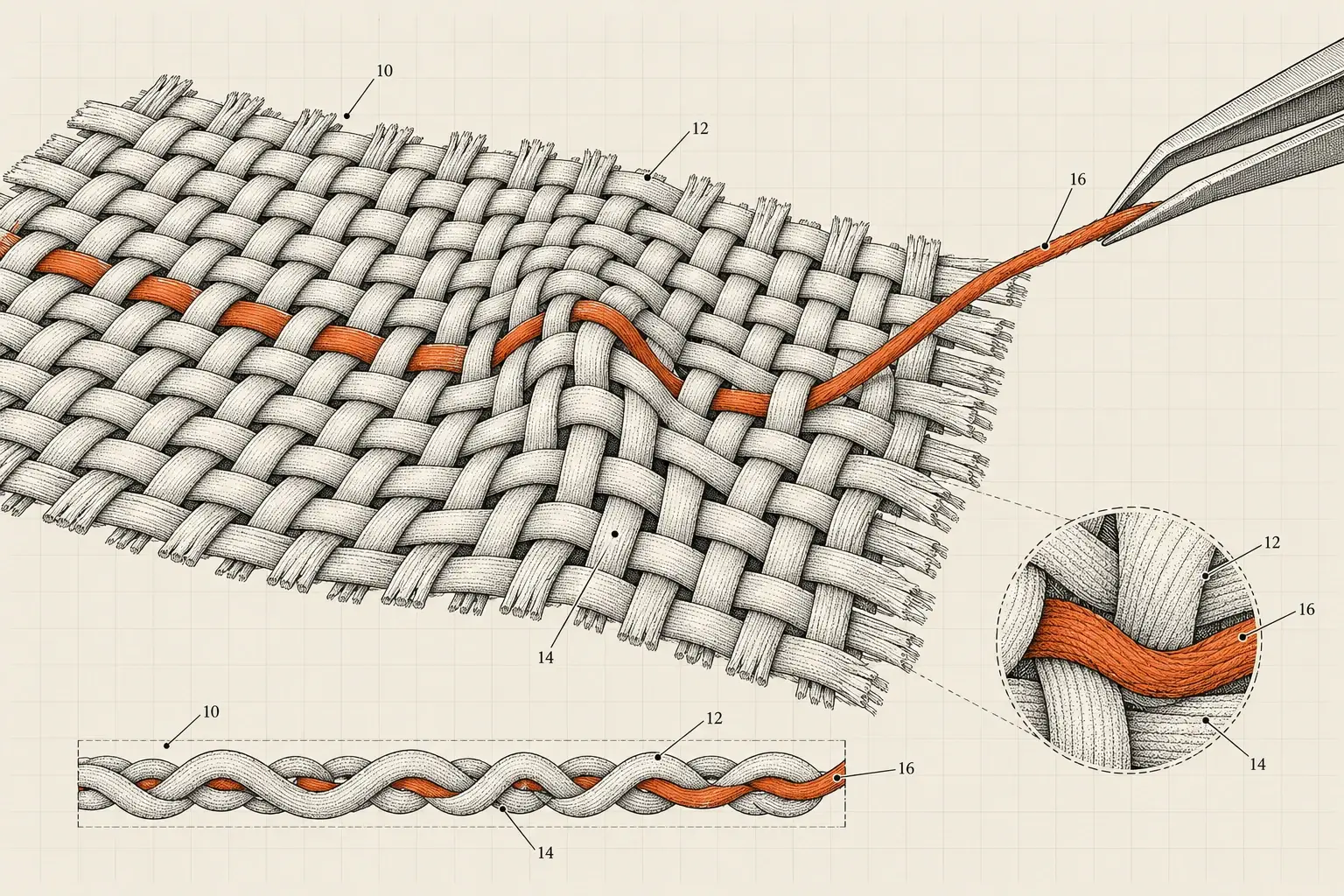
Every claim is a weave. One earlier thread can change its shape. Our job is to find that thread, document exactly where it came from and when it was public, and map it to the claim elements. Whether it changes anything is a question for counsel.
§ 05 — Boundaries
What this is not
- Not a validity or invalidity opinion. We find references and map them technically. Conclusions belong to your patent attorney or litigation counsel.
- Not litigation work. We don't act as expert witnesses, advocates, or consultants on case strategy.
- Not claim construction. We follow the construction your counsel gives us, or the plain claim language when none is given.
- Not a promise that strong art exists. Sometimes the search comes back thin, and we say so plainly. That is useful to know too.
Metadragons LLC is not a law firm. See our scope and disclosures for what we do and don't do.
§ 06Questions
Questions buyers ask
Something else on your mind? Call (505) 357-5188 or write to info@metadragons.com.
What do you need to start?
The patent number, the claims you care about, the priority date to search before, and any claim construction or known prior art, including references cited during examination. If counsel is involved, we are glad to take instructions from them directly.
How long does it take?
Typically 2–3 weeks. Deep non-patent and foreign-language work is what takes the time. Rush timing is available when scope allows and is quoted separately.
We already have the examiner's references. Why search again?
Because those references were already considered. What matters now is what wasn't: non-patent literature, foreign filings, and products that were public before the priority date. Free tools such as Google Patents search text well, but they rarely surface an old product manual or show when it was published.
Is the work confidential?
Yes. Assertion and acquisition work is sensitive, so we sign an NDA before you share anything. Files stay in US-based systems, encrypted in transit and at rest, and are never used to train AI models. On request, we delete them within 30 days of project close. We don't name our clients.
Who reads the report?
Usually your patent attorney or litigation counsel, sometimes a deal team. The charts are built for counsel to check; the summary is written so a business owner can follow it.
Can you tell us whether the patent will hold up?
No. That is a legal conclusion. We give your counsel the strongest references we can find, mapped and dated, so their judgment rests on evidence.
Keep reading
Where to go next
§Next step
Find the earlier art before anyone else does
Send the patent number and your deadline. After a free scoping call, you'll have a fixed-fee written quote within one business day.