§Valuation & Commercial Assessment
Patent valuation services that show their working
Three services for owners, investors, and portfolio managers: commercial value ranges, standardized due-diligence data packs, and keep-or-lapse rankings. Every number arrives with its assumptions and sources attached.
§ 01Context
What a patent is worth depends on the question
Most patent valuation services answer a single question: what is this worth? In practice, owners and investors ask three different ones. What might someone pay for this patent? What does the public record actually say about it? And is it worth the next maintenance fee? Each question needs different evidence, so we answer them with three services that share one data trail.
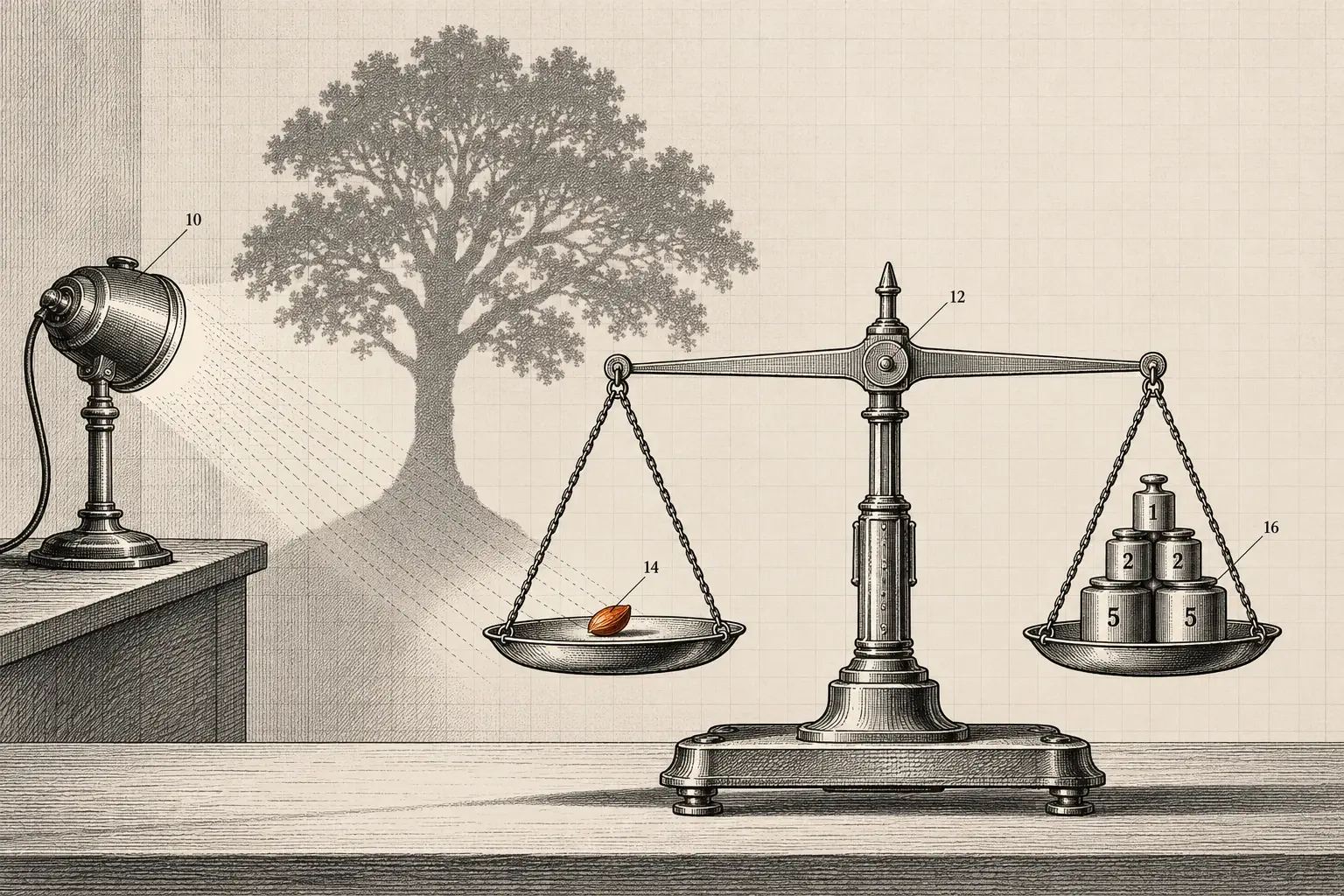
Value is weighed in futures. A patent’s worth sits in the products it may touch over its remaining term, and that future can’t be measured, only estimated. So we estimate in the open. Every range comes with an assumptions register, every fact in a data pack links to its source, and every pruning rank shows its weights. If you disagree with an input, you can change it and see what moves.
All three are commercial estimates and factual research for business planning. They are not fairness opinions, tax or financial-reporting appraisals, investment advice, or legal opinions on validity or ownership. Our scope and disclosures page sets out exactly where our work ends. When a deal needs a buyer rather than a number, the same research carries straight into patent brokerage.
§ 02Overview
Three services, one data trail
Commercial Patent Valuation
Cost, market, and income approaches triangulated into a low, base, and high range, with every assumption written down and a working model you can test.
2–4 weeks12IP Due-Diligence Data Packs
Standardized factual packs on family structure, recorded assignments, maintenance status, citations, public dockets, and comparables, for investors, lenders, funders, and acquirers.
5–10 business days14Portfolio Pruning Analytics
Keep, sell, license, or lapse candidate rankings that weigh each upcoming maintenance-fee window against the commercial signals around the asset.
2–4 weeksA valuation is only as honest as its assumptions. We write ours down.
If the commercial evidence is thin, the range will say so, and so will we.
§ 03Compare
Which service fits your question?
Many engagements use two: a data pack before a valuation, or pruning before a sale.
| Item | Commercial Patent Valuation | IP Due-Diligence Data Packs | Portfolio Pruning Analytics |
|---|---|---|---|
| The question | What might this patent be worth to a buyer, licensee, or investor? | What does the public record say about these assets? | Which patents should we keep paying for? |
| Main output | A stated range with an assumptions register | A sourced, standardized fact pack | A ranked keep, sell, license, or lapse list |
| Typical reader | Owners, founders, boards, investors | Investors, lenders, funders, acquirers, counsel | IP managers, finance teams, tech-transfer offices |
| Typical turnaround | 2–4 weeks | 5–10 business days | 2–4 weeks |
Not sure which you need? The free 20–30-minute scoping call exists for exactly that question.
§ 04Questions
Questions about patent valuation
Something else on your mind? Call (505) 357-5188 or write to info@metadragons.com.
Is a commercial valuation the same as an appraisal?
No. Our valuations are commercial estimates for business planning: sale and licensing strategy, budgets, and investor conversations. Tax, financial-reporting, and litigation uses call for a credentialed appraiser or expert.
Should we start with a data pack or a valuation?
For a deal, start with the data pack. It confirms what exists, who is on record as owner, and what is in force. A valuation built on a wrong family map is a well-formatted mistake.
Can a valuation lead into a sale?
Yes. The range and the research behind it feed directly into Sell Your Patent, so nothing is redone. Valuation never commits you to selling.
How are these services priced?
Each engagement gets a fixed-fee written quote within one business day of a free scoping call. Nothing is billed beyond the quote without your written approval.
Keep reading
Where to go next
§Next step
Bring the question you need answered
Tell us the patents and the decision ahead. After a free 20–30-minute scoping call, you’ll have a fixed-fee written quote within one business day.