§Patent Illustration & Visuals
3D patent illustration for people who will never read the claims
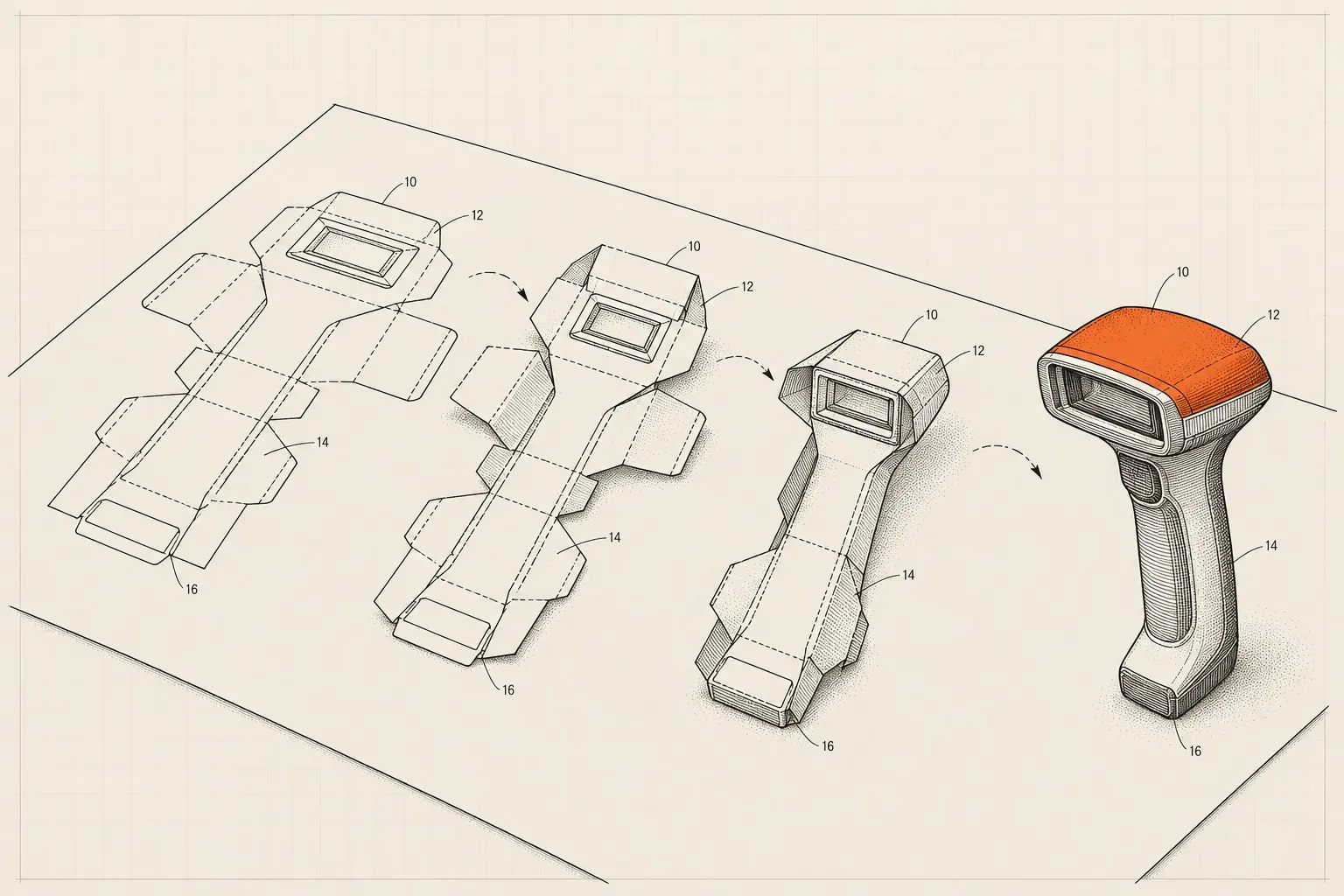
Exploded views, renders, and short animations that show how an invention works to investors, grant reviewers, buyers, and booth visitors. Built from your CAD files, drawings, or patent figures in 2–4 weeks.
- Typical turnaround
- 2–4 weeks
- Best for
- Startups, grant applicants, licensing teams, and exhibitors
- You receive
- Renders, exploded views, cutaways, and short animations in the formats your deck, proposal, or booth needs
- Important
- These are communication assets, not USPTO drawings
§ 01Deliverables
What you receive
Visuals designed to explain, built from the same geometry as your patent figures.
Exploded views
Every part pulled apart along its axis, so a viewer sees how the assembly goes together at a glance.
Renders
Realistic or stylized images of the device, in color, with materials and lighting chosen to explain rather than decorate.
Cutaways and callouts
Sections that open the device to show the part that matters, with labels a non-engineer can follow.
Short animations
Mechanisms in motion, assembly sequences, or before-and-after comparisons, cut to fit a pitch slide or a booth loop.
Source files on request
Scene and model files, so your team can reuse the assets in later decks and updates.
§ 02Overview
When teams use it
Pitch decks
Investors decide quickly. One clear render of how the device works can replace three slides of description.
SBIR and STTR proposals
Reviewers read many proposals. A figure that explains the innovation at a glance helps yours be understood. See support for startups and grant applicants.
Trade shows
A looping animation explains a mechanism to people walking past the booth, without anyone giving the same pitch 200 times.
Licensing packets
Prospective licensees see the invention working before they read the claims. Pairs well with Licensee Identification.
§ 03Process
How it works
- 01
Scope the audience
On a free scoping call, we agree who will see the visuals, where, and what they must understand. A fixed-fee written quote follows within one business day.
- 02
Gather the sources
CAD files, patent figures, sketches, photos, or a prototype on video. We sign an NDA before you share them.
- 03
Storyboard or view list
A short storyboard for animations or a list of views for stills. You approve it before production starts.
- 04
Build and refine
Models, materials, lighting, and motion, with your feedback taken at the storyboard and draft stages.
- 05
Deliver
Final stills and video in 2–4 weeks, in the formats you need.
§ 04Context
Communication assets are not patent drawings
3D patent illustration does a different job from formal drawings, and mixing the two up causes trouble in both directions. USPTO drawings follow strict rules: black and white, solid black lines, standard sheet sizes, numbered figures, and color in utility applications only after a granted petition. Those rules exist so every application can be read the same way. They were not written to persuade a room.
A render or animation has the opposite brief. It must be understood by someone who will never read the claims: an investor with three minutes, a grant reviewer with a stack of proposals, a buyer's engineer deciding whether to take a second meeting. Color, motion, cutaways, and context are all allowed, and all useful. Some ideas only make sense once they stand up off the page.
So we keep the two separate, and we build them from the same source. When renders and filing figures come from the same CAD geometry, the deck never contradicts the patent. If you need formal sheets, see Utility Patent Drawings or Design Patent Drawings.
§ 05 — Boundaries
What this is not
- Not USPTO drawings. Renders and animations are not prepared to the formal drawing rules and are not intended for filing.
- Not a marketing campaign. We produce the visuals; we don't run ads or write sales copy.
- Not engineering validation. A render shows how a design is intended to work; it does not test whether it does.
- Not a promise of funding, sales, or licensing. Good visuals help people understand an invention; the decision is still theirs.
Metadragons LLC is not a law firm. Visuals are communication assets for your business use.
§ 06Questions
Questions buyers ask
Something else on your mind? Call (505) 357-5188 or write to info@metadragons.com.
What do I need to send?
CAD files are ideal. Patent figures, sketches, photos, or a video of a prototype also work. Tell us where the visuals will be used and who will see them.
How long does it take?
Typically 2–4 weeks. Animation length and model complexity drive most of the time; stills built from clean CAD sit at the faster end.
Can I use these renders in my patent application?
Not as filing drawings. USPTO drawings must meet the formal rules in 37 CFR 1.84, and color in utility applications needs a granted petition. Your practitioner can advise on what a filing needs, and we can produce the formal set separately.
Can you work from my patent figures alone?
Often, yes. Patent figures give geometry and part relationships; we may ask a few questions to fill gaps such as materials and proportions. CAD makes the result more accurate and quicker to produce.
Can the visuals support a patent sale or licensing campaign?
Yes, as explanation. A short animation in a licensing packet helps a prospective licensee's engineers see the invention working before the first call. The commercial case still rests on the patent and the evidence behind it; see Sell Your Patent for how that work is done.
Are the visuals kept confidential before launch?
Yes. NDA before you share anything, US-based systems, encryption in transit and at rest, and no use of client materials to train AI models. You decide when and where the visuals appear.
Keep reading
Where to go next
§Next step
Make the invention easy to see
Tell us the audience and the deadline. After a free scoping call, you'll have a fixed-fee written quote within one business day.