§Licensing & Commercialization
Technology scouting services that start with your problem
Technology Scouting finds licensable technologies, startups, and university and national-lab inventions that solve a technical problem you state in writing. You receive a screened shortlist with sources, owners, and next steps, and we coordinate introductions.
- Typical turnaround
- 3–6 weeks
- Best for
- R&D, product, and corporate development teams with a defined technical problem
- You receive
- A written problem brief, a screened shortlist, and a comparison matrix
- Delivered to
- Your R&D and business development teams
§ 01Deliverables
What you receive
Problem brief
The technical problem, performance targets, constraints, and what has already been tried, written with you and agreed before the search begins.
Multi-source search
Patents and published applications, technical literature, public tech-transfer listings, startup sources, and public SBIR/STTR award records on SBIR.gov.
Screened shortlist
Each candidate with a technical summary, maturity signals, the owner, the public status of related patents, and any licensing information the owner has published.
Comparison matrix
Candidates scored against your performance targets and constraints, so the trade-offs are visible on one page.
Introductions
Coordinated first conversations with owners, from tech-transfer offices to startup founders, each one documented.
Audit trail
Databases, classifications, query strings, date cut-offs, the AI tools used, and analyst notes on what was kept and why.
§ 02Overview
When teams use it
Make-or-buy decisions
Before committing an R&D budget, check whether someone has already solved the problem and would license the solution.
Closing a capability gap fast
A product deadline needs a capability your team doesn’t have. Scouting finds who does, and whether it can be acquired or licensed.
Corporate venturing
Build a pipeline of startups working on the problems your business cares about, with the patent position of each one in view.
Corporate R&D programs
Ongoing scouting for corporate IP and R&D teams, with new candidates surfaced through Hoard Watch.
§ 03Process
How it works
- 01
Write the problem
A free 20–30-minute scoping call, then a written problem brief. You get a fixed-fee written quote within one business day of the call.
- 02
Search widely
AI-assisted semantic search, classification expansion, and citation expansion across patents, literature, and public listings, in every vocabulary the problem might be described in.
- 03
Screen
Analysts read every candidate against the brief. A second analyst reviews the shortlist.
- 04
Review with you
We walk through the shortlist and the comparison matrix and agree which owners to approach.
- 05
Introduce
We coordinate first conversations. Licensing or purchase terms go to you and your counsel.
§ 04Insight
Write down the problem, not the solution you imagine
Technology scouting services fail most often at the brief. A team asks for “a better adhesive” and gets a list of adhesives, when the real problem was joining two dissimilar materials at high temperature, and the best answer was a fastening method from another industry.
So we write the problem first: what has to happen, under what conditions, at what cost and scale, and what has already been tried. Then we search for solutions in every vocabulary that might describe them. Semantic search helps here, because a university lab, a startup, and a manufacturer rarely use the same words for the same idea. Analysts read every candidate, because a close match on words can still be a poor match on physics.
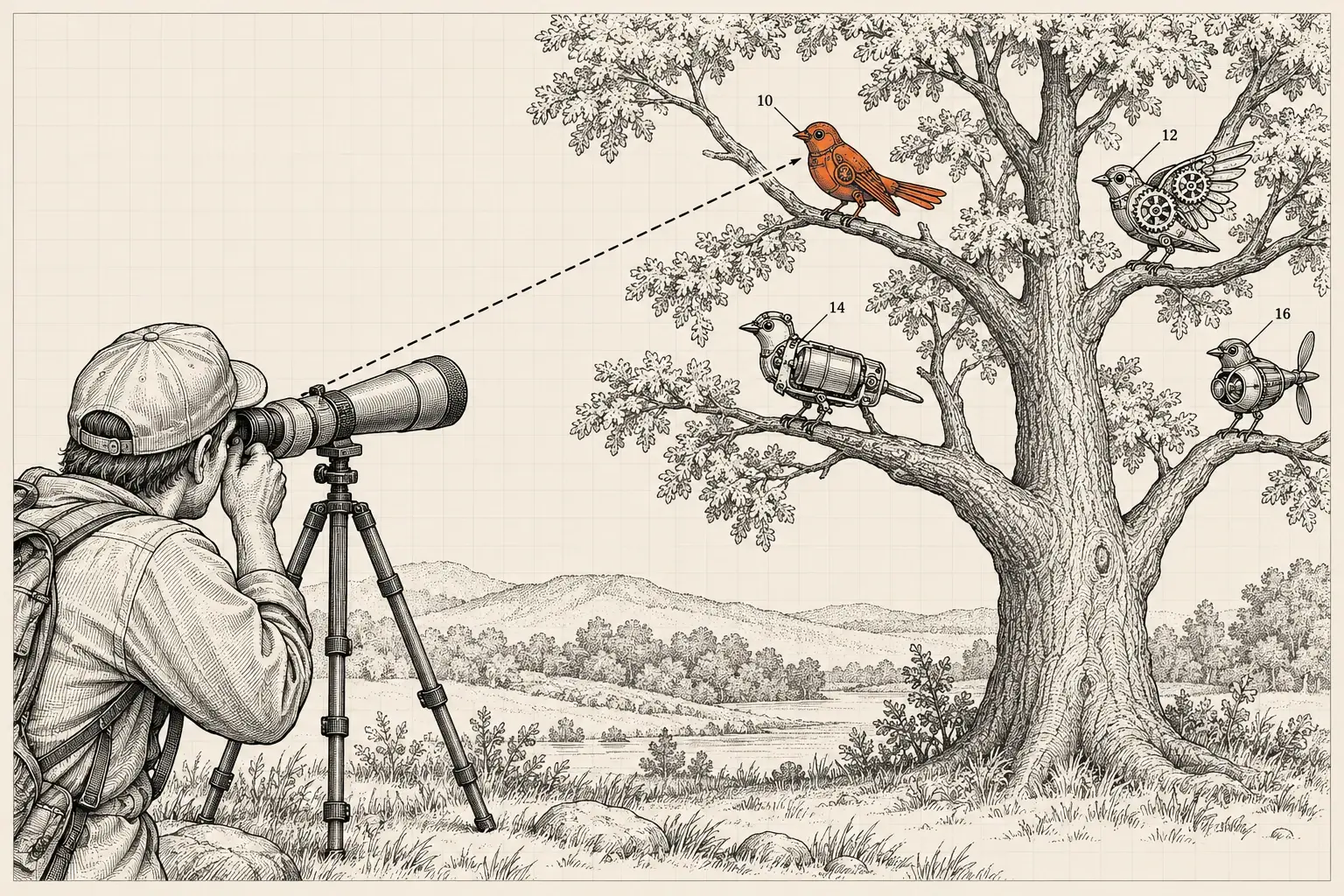
Scouting is mostly patience and good optics. The rare find is often in plain view: many useful inventions sit disclosed in a patent, a paper, or a public tech-transfer listing, waiting for someone who knows what to look for.
We name sources, not partners. We have no partnership or preferred access with any university, laboratory, or startup. We find what they publish, and we approach them through their public channels.
A close match on words can still be a poor match on physics.
§ 05 — Boundaries
What this is not
- No partnership or preferred access with any university, laboratory, or startup.
- We don’t negotiate licenses or draft agreements. Your counsel does.
- No freedom-to-operate opinion on any candidate. For the search counsel relies on, see Product Clearance Search.
- No investment advice on startups or their valuations.
§ 06Questions
Questions about technology scouting
Something else on your mind? Call (505) 357-5188 or write to info@metadragons.com.
How is scouting different from a patent landscape?
A landscape maps a whole field: who files what, where, and how fast. Scouting answers one problem and ends with a shortlist of solutions and owners. Many teams run a landscape first and scout from it.
Do you only look at patents?
No. Patents are one source. We also search technical literature, public tech-transfer listings, startup sources, and public SBIR/STTR award records, because some solutions are published or funded before they are patented, and some are never patented at all.
Will the owners know who we are?
Not unless you choose. We make first contact in our own name and describe your interest in general terms. Your identity is disclosed when you decide.
Do you scout outside the United States?
Yes. Patent data and literature are searched worldwide, and the problem brief states the regions that matter to you.
What happens after the shortlist?
You choose which owners to meet, and we coordinate introductions. If a candidate is worth owning outright, Patent Acquisition can take it from there.
Keep reading
Where to go next
§Next step
Describe the problem. We’ll find who has solved it.
Start with a free 20–30-minute scoping call. You’ll have a fixed-fee written quote within one business day and a screened shortlist in 3–6 weeks.