§Licensing & Commercialization
Find patent licensees with evidence, not a mailing list
Licensee Identification researches which companies are most likely to value a license on your patent, ranks them, prepares the outreach, and makes documented warm introductions. You and your counsel take it from the first meeting.
- Typical turnaround
- 3–5 weeks
- Best for
- Universities, labs, startups, and owners of issued patents or published applications
- You receive
- A ranked target list, outreach materials, and documented introductions
- Delivered to
- You, your licensing team, and your counsel
§ 01Deliverables
What you receive
Product-to-patent research
Public product documentation, datasheets, manuals, and specifications organized against your claim features. Technical facts only, so your counsel can judge what they mean.
Ranked target list
Companies scored on technical fit, market position, filing activity in your classifications, citations to your patent, and licensing history where it is public.
Contact map
The roles that own the problem at each target company, such as R&D leads, business development, and licensing, identified from public sources.
Outreach materials
A non-confidential technology summary, a one-page brief, and an introduction note, approved by you (and your counsel, if you wish) before anything is sent.
Documented warm introductions
Personal, researched introductions to named people, each logged: who, when, what was shared, and how they responded.
Meeting coordination
We schedule first meetings and route the confidentiality paperwork your counsel prepares, so conversations start on time and on the record.
§ 02Overview
When teams use it
Technology-transfer offices
More inventions than hours, and a licensing pipeline that needs names. See how we support universities and labs.
12Startups changing direction
A pivot leaves patents on a technology you no longer pursue. Licensing them can help fund the new direction. See how we work with startups.
14Owners weighing license versus sale
Run licensee research first and see who is interested. If you would rather sell, the same evidence feeds Sell Your Patent.
16Before setting terms
Pair the target list with a commercial valuation, so your counsel goes into talks with a reasoned range.
§ 03Process
How it works
- 01
Scoping call
A free 20–30-minute call about the patent, your goals, and any companies already in mind. You get a fixed-fee written quote within one business day.
- 02
Research
After an NDA, analysts run product-to-patent research, citation analysis, and filing analysis across the field.
- 03
Rank and choose
We review the ranked list with you and agree on the shortlist for introductions. A second analyst reviews the research first.
- 04
Introduce
We send approved materials and make personal introductions, logging every contact and response.
- 05
Hand off
We coordinate first meetings. Terms and agreements go to you and your counsel.
§ 04Insight
Start with the companies that have already met your patent
The usual way to find patent licensees is a long list and a mail merge. It rarely works, because the letter lands with someone who has no reason to care.
A better starting point sits in the public record. When an examiner cites your patent during the examination of another company’s application, that company has already met your patent, in writing, in its own file. Forward citations show who is building near you, and examiner citations are a particularly direct signal. We combine them with product research: public specifications, manuals, and datasheets showing which products include features that correspond to your claim elements.
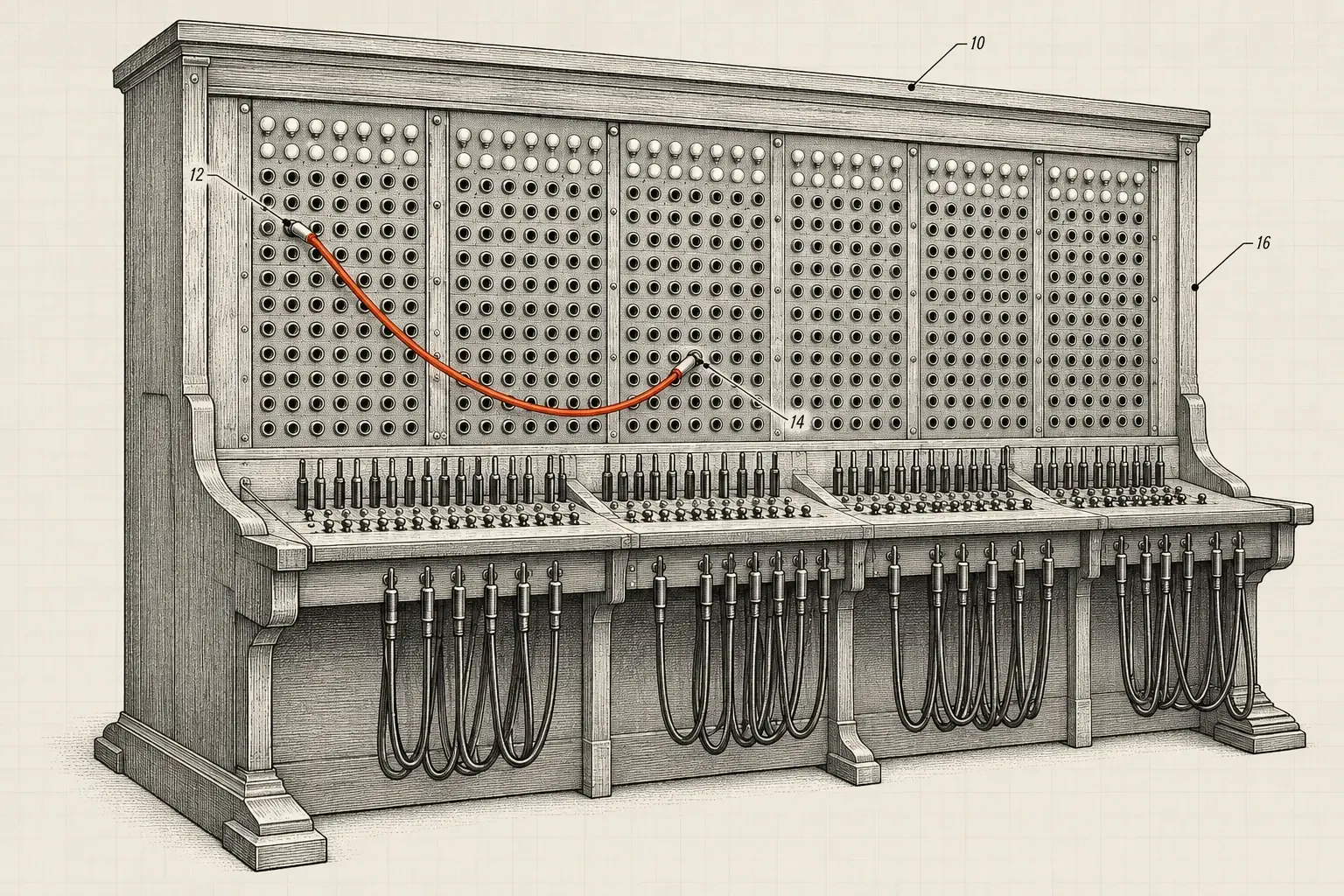
Good introductions are switchboard work: one right line, connected once, beats ringing every number on the board. A short list of companies with both signals, introduced personally to the person who owns the technical problem, beats a mailing to 200 names. Every introduction is documented, so you always know who saw what, and when.
What the evidence means legally is for your counsel. Our research is technical fact, gathered to start a business conversation, not to make a demand.
A short list with two signals beats a mailing to 200 names.
§ 05 — Boundaries
What this is not
- We don’t negotiate license terms or draft agreements. Your counsel does.
- No assertion work: no demand letters, no enforcement claim charts, no litigation support.
- No opinion on whether any company’s products fall within your claims.
- No promise that a target will take a license, or of any royalty.
§ 06Questions
Questions about finding licensees
Something else on your mind? Call (505) 357-5188 or write to info@metadragons.com.
How many companies will be on the list?
It depends on the field. We rank a longlist and recommend a shortlist for introductions, because a few well-prepared introductions usually beat many thin ones. The quote states the scope before work begins.
Will outreach reveal confidential information?
No. First contact uses non-confidential materials only. Confidential details are shared later, under paperwork your counsel approves.
Is this an assertion campaign?
No. We make business introductions supported by technical research. If you are considering enforcement, that is a conversation for your patent counsel.
What if nobody is interested?
We report exactly what we heard and from whom. Silence and objections are data: they may point to a narrower field, a sale instead of a license, or a reason to stop spending.
Can you work alongside our licensing staff?
Yes. Many offices use us as a research and outreach desk while their own staff lead the relationships and negotiations.
What does it cost?
Each engagement gets a fixed-fee written quote within one business day of the scoping call. Nothing is billed beyond it without your written approval.
Keep reading
Where to go next
§Next step
Find the companies that need what you own
Send the patent number and what you hope to achieve. After a free 20–30-minute scoping call, you’ll have a fixed-fee written quote within one business day.