§Patent Search & Research
A design patent search that starts with the shape, not the words
An image-led search of design patents and registrations for physical products, graphical user interfaces, icons, and projected or AR/VR interfaces. Analysts compare views, not keywords, and deliver in 4–6 business days.
- Typical turnaround
- 4–6 business days
- Best for
- Product designers, UX teams, and practitioners before a design filing or a launch
- You receive
- Image-matched references, side-by-side comparison sheets, a reference spreadsheet, and the audit trail
- Delivered to
- You, or your patent attorney or agent
§ 01Deliverables
What you receive
Built to be looked at, because appearance is the whole question.
Side-by-side comparison sheets
Your design beside each close reference, view for view, so the visual similarities and differences are easy to see and discuss.
Design patents and registrations
US design patents plus foreign industrial design registrations, with links, dates, owners, and classifications.
Interface and icon coverage
Screen-based GUIs and icons, plus projected, holographic, and AR/VR interface designs, all searched as images.
Beyond the registers
Where relevant, product catalogs, design publications, and archived product pages. A design shown in public can be prior art whether or not anyone patented it.
Audit trail
Image queries, registers covered, classifications searched, date cut-offs, AI tools used, and analyst notes.
§ 02Overview
When teams use it
Before a design filing
See the closest earlier designs before your practitioner settles on the views. Then the drawings can be planned with the nearby art in mind.
Before a product or interface launch
Check which registered designs sit near a new product shape or screen. Your counsel interprets the results; we find them.
For interfaces leaving the screen
Projected, holographic, and AR/VR interfaces are newly in scope at the USPTO, so the record around them is young and moving.
For practitioners
An image-led search in a format built for a practitioner's review, delivered straight to you. More on how we support practitioners.
§ 03Process
How it works
- 01
Scope and quote
A free 20–30-minute scoping call, a fixed-fee written quote within one business day, and an NDA before you share any unreleased design.
- 02
Send the views
CAD renders, photos, screenshots, or sketches. For interfaces, include every screen and state you care about.
- 03
Search by image and class
AI image search across design registers, combined with US design classes and Locarno classes, then text and citation checks to close the gaps.
- 04
Compare view by view
Analysts compare candidates against every view, not just the most flattering one. A second analyst reviews the selection.
- 05
Deliver
Comparison sheets, spreadsheet, and audit trail in 4–6 business days. Rush timing is available when scope allows, quoted separately.
§ 04Context
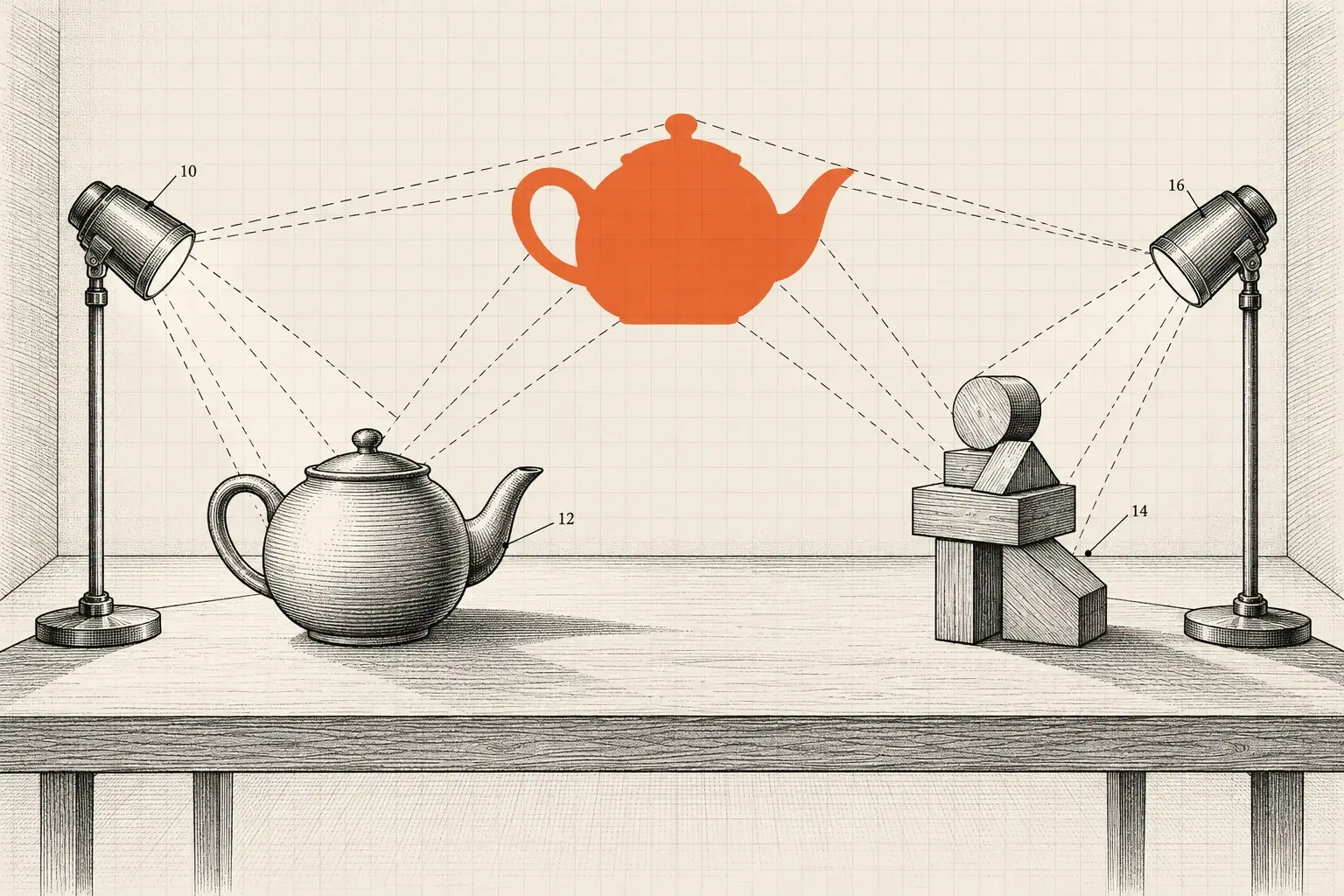
In design, the silhouette is the claim
A design patent protects how something looks, so a design patent search has to work the way an eye does. Keywords fail fast. Two quite different products can cast the same silhouette, and two interfaces whose titles share nothing can look nearly identical on screen. Classification helps, but only so far. US design patents use their own design classes, international registrations use the Locarno system, and the USPTO itself notes that a one-to-one relationship between the two is not always possible.
Examination has moved to images too. In July 2025 the USPTO gave design examiners DesignVision, an AI image-search tool that queries design patents, registrations, and trademarks from more than 80 registers worldwide. If your application will be examined by image, image search is how you should look first.
The scope of what can be filed is wider as well. The USPTO's supplemental guidance of March 13, 2026 explains when computer-generated interfaces and icons, including projections, holograms, and virtual and augmented reality designs, can qualify for design protection. It also drops the requirement to show the display panel when the title and claim identify the article. More eligible subject matter means more filings to search against.
§ 05 — Boundaries
What this is not
- Not a legal opinion on patentability, or on whether one design is too close to another. Visual comparison is technical; the legal test belongs to counsel.
- Not a trademark search. Logos, brand names, and trade dress need a trademark clearance, which we don't perform.
- Not a utility search. If how the product works matters as much as how it looks, pair this with a Patentability Search.
- Not drawings. When you're ready to file, see Design Patent Drawings.
Metadragons LLC is not a law firm. Results are technical research for review by you and your patent attorney or agent.
§ 06Questions
Questions buyers ask
Something else on your mind? Call (505) 357-5188 or write to info@metadragons.com.
What should I send?
Images of every side of the product, or every screen and state of the interface: CAD renders, photos, screenshots, or sketches. Tell us which features matter most and where you plan to file or sell. We sign an NDA first.
How long does it take?
Typically 4–6 business days. Rush timing is available when scope allows and is quoted separately.
Why not just search by keyword on a free database?
Because design records say very little in words. A title such as “display screen with graphical user interface” matches a vast number of documents and tells you nothing about how any of them look. Image-led search plus classification finds what keywords cannot.
Do you search AR/VR, projected, and holographic interfaces?
Yes, alongside conventional screen-based GUIs and icons. After the 2026 USPTO guidance, these designs are an evolving part of the record, and we search them as images rather than relying on titles.
Is an unreleased design kept confidential?
Yes. Unreleased designs are among the most sensitive files we receive. NDA before you share them, US-based handling, encryption in transit and at rest, no use in training AI models, and deletion on request within 30 days of project close.
Who is the report for?
Designers can read the comparison sheets directly. The spreadsheet and audit trail are built for your patent attorney or agent.
Keep reading
Where to go next
§Next step
Search the shape before you file it
Send a description of the design in general terms. After a free scoping call, you'll have a fixed-fee written quote within one business day.