USPTO AI Search Tools Explained: What Examiners Use and What It Means for Applicants
Similarity Search is now mandatory in utility examination, DesignVision searches images across 80+ registers, and the ASAP! pilot sent applicants AI-found references before examination. Here is what each does and what it means for you.
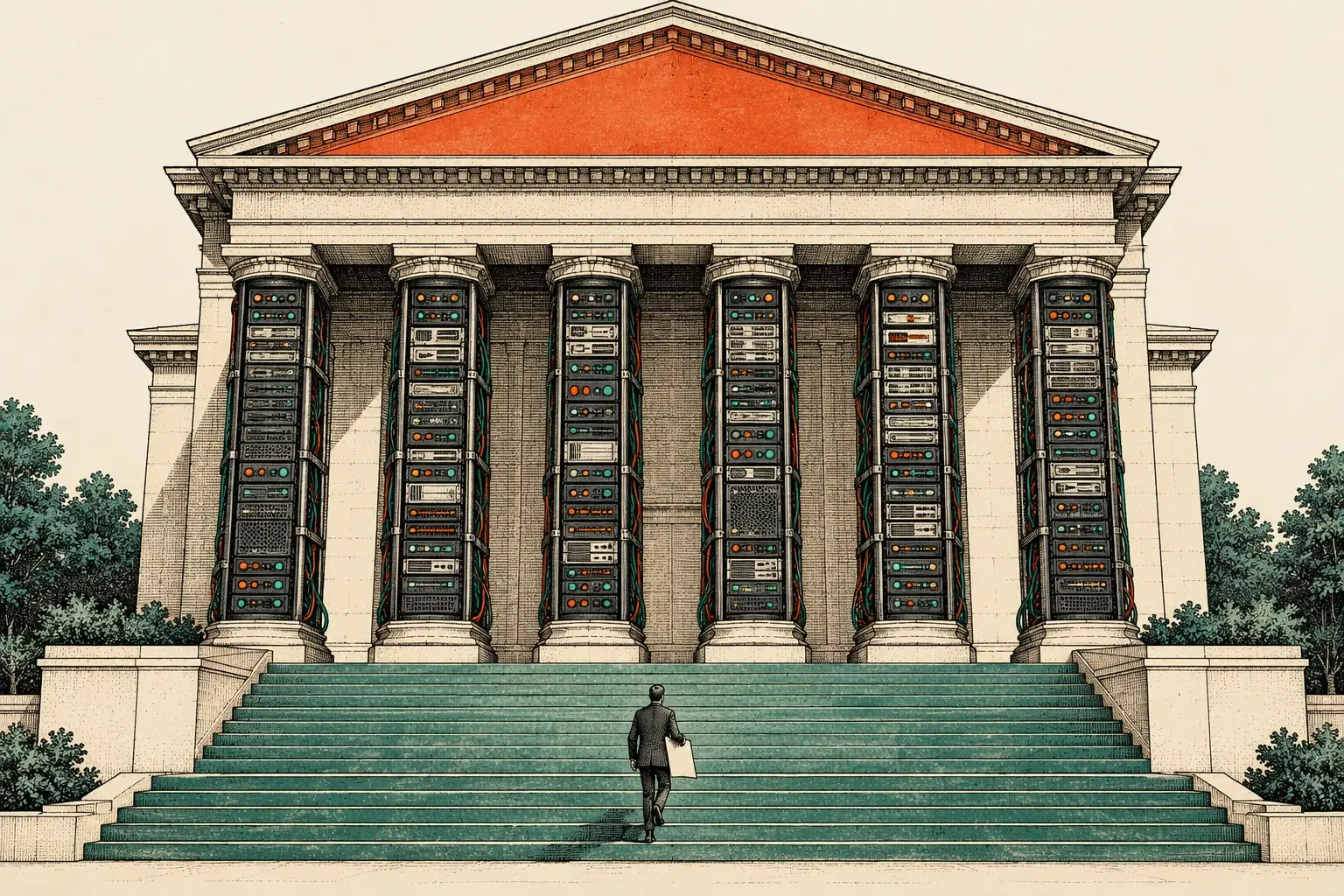
The USPTO now runs three AI search tools that matter to applicants. Similarity Search is a required step when examining every utility and plant application. DesignVision is an image search tool for design examiners. The Artificial Intelligence Search Automated Pilot Program (ASAP!) sent some applicants up to 10 AI-ranked references before examination began. The practical effect is that the closest patent documents will be found quickly, so the value of your own search shifts to what these tools do not cover.
The three tools at a glance
| Similarity Search | DesignVision | ASAP! pilot | |
|---|---|---|---|
| Who runs it | Utility and plant examiners | Design examiners | The USPTO, before examination |
| Input | Application text and classification, selected by the examiner | Up to seven images, plus optional text and classification filters | CPC classification, specification, claims, and abstract |
| What it searches | Domestic and foreign patent documents | Over 80 global registers of designs, design patents, and trademarks | U.S. patents, U.S. pre-grant publications, and Foreign Image and Text (FIT) |
| What you see | Queries and retrieved documents in the search history | Which application images were used, filters, and results | An Automated Search Results Notice listing up to 10 documents |
| Status, July 2026 | Mandatory in utility and plant examination | Available to design examiners | Closed to new petitions |
Similarity Search: the examiner’s default first pass
PE2E Search, the examiners’ internal search tool, has carried AI features for several years. The DesignVision notice lists two earlier ones: “More Like This,” announced in a January 2022 Official Gazette notice, and Similarity Search. The USPTO says utility examiners began using it in September 2022, and the formal Official Gazette notice described it as an enhanced replacement for PLUS, the older query-by-example tool. Similarity Search queries finish in seconds. PLUS searches, by the notice’s account, could take hours.
The tool uses trained AI models to return a ranked list of domestic and foreign patent documents similar to the application. Examiners can emphasize CPC symbols, paragraphs, sentences, or words to focus the query on one concept.
The big change came on October 24, 2025. A memo to the examining corps states that “examiners are required to use Similarity Search during examination of a plant or utility application and record the conducted Similarity Search in the application file wrapper.” The memo also says it is improper to note only that an AI tool was used without recording the query. When an examiner includes a Similarity Search query in the search history printout, every document that query retrieved is listed with it.
DesignVision: image search for design examination
The USPTO announced DesignVision on July 17, 2025, calling it the first AI-based image search tool available to design examiners in the PE2E suite. The accompanying Official Gazette notice adds the working details:
- It runs a federated search of design patents, registrations, trademarks, and industrial designs from more than 80 global registers, including WIPO and the EUIPO.
- An examiner can submit up to seven images as one query, weight visual features, focus on part of a design, and apply text and classification filters.
- It augments, and does not replace, the examiner’s other search tools.
- The file wrapper’s search notes show which of the application’s images were used as queries. The search history report shows the number of images uploaded, the filters applied, and the results. The uploaded images themselves are not included, to protect confidentiality.
The notice also says the USPTO may later make the tool available to other examiners, such as utility examiners, at its discretion.
ASAP!: an AI search before examination begins
The Automated Search Pilot Program was announced in a Federal Register notice on October 8, 2025 (90 FR 48161), and petitions opened on October 20, 2025. Per the program page, it worked like this:
- Eligibility: original, noncontinuing, nonprovisional utility applications filed under 35 U.S.C. 111(a). National-stage, plant, design, reissue, and continuing applications were excluded. Track One applications could take part.
- How to join: file Form PTO/SB/470 electronically in Patent Center on the application’s filing date, be enrolled in the e-Office Action Program, and submit DOCX-compliant text.
- What you received: an Automated Search Results Notice (ASRN). It listed up to 10 documents in descending order of relevance, as ranked by the AI tool, plus a search string you could run in Patent Public Search.
- What you had to do: nothing. The ASRN is not a notification under 35 U.S.C. 132 and sets no reply period. Applicants could file a preliminary amendment, request deferral of examination, or expressly abandon the application to recover the search fee and any excess claims fees.
- How examiners treat it: examiners consider the listed documents as they would other documents in Office search files. They need not list them on a PTO-892 unless they rely on one in a rejection.
Demand was modest. The original plan targeted at least 1,600 applications, 200 per Technology Center. In March 2026 the USPTO doubled the target to 3,200 and waived the petition fee for petitions filed on or after March 23, 2026. On April 16, 2026, it extended the pilot to June 1, 2026. As of April 16, according to IPWatchdog, 169 petitions had been filed and 76 granted.
ASAP! pilot: targets vs. uptake (as of April 16, 2026)
applications
Source: USPTO; IPWatchdog
What this means for applicants
The examiner now works with an AI assistant. Plan for what it will find.
Expect the closest patent documents to surface early
With Similarity Search mandatory, assume the examiner will see the nearest patent documents to your specification within minutes. A pre-filing search that only finds what a similarity engine would find tells you little the examiner won’t learn anyway. The useful margin is elsewhere: non-patent literature, figure-only disclosures, and art from neighboring fields that uses different words.
Your words are the query
Both Similarity Search and the ASAP! tool take the specification and claims as input. The vocabulary in your application directly shapes what the examiner’s first pass returns. How that should affect drafting is a question for your patent attorney or agent. The research point is simpler: search in the vocabulary of your draft and in the vocabulary of adjacent fields.
Read the AI searches already on the record
Because Similarity Search queries and their results must now be recorded, the file histories of published applications in your field show what the examiner’s AI considered close. For a competitor’s application, that is a free, examiner-generated reference list. It costs nothing but reading time.
Design filers face a wider net
DesignVision compares images against trademarks and foreign industrial designs as well as U.S. design patents. A GUI icon or product shape may now be compared with a registered logo abroad. An image-led search before filing is the way to see that comparison first.
Early reference lists need a plan
If you received an ASRN, decide with your practitioner what to do with it. Nixon Peabody’s April 2026 alert suggests a reference-by-reference review with counsel. The USPTO’s program page also notes that ASRN references are not automatically considered in a continuing application. Applicants who want them considered there should cite them in a compliant information disclosure statement.
What is still unknown
Several questions remain open as of July 2026:
- Results. The USPTO said it would evaluate how pre-examination searches affect prosecution and whether ASRNs can scale. We have not seen published findings, including how often ASRN references match what examiners later cite.
- A successor program. The Federal Register notice allowed the USPTO to extend or end the pilot. Whether a permanent or expanded version follows, for which application types, and at what fee, is the question to watch.
- Accuracy. We have not found published accuracy benchmarks for Similarity Search or DesignVision.
- Image search for utility cases. In May 2026, FedScoop reported a USPTO request for information on an AI image search tool for examiners, with responses due June 19. The agency said text and classification searching alone is no longer sufficient for visual design and utility applications. What it procures, and when, is not yet known.
- Non-patent literature. None of the published tool descriptions covers journals, theses, or product literature. Whether future tools will is an open question.
How Meta Dragons can help
We build pre-filing searches around the examiner’s toolkit. AI-assisted recall covers the patent documents a similarity engine would find. Analysts then work the gaps: non-patent literature, figures, and adjacent fields. Our Patentability Search is delivered to you or your practitioner in 5–7 business days, with a full audit trail. For designs, GUIs, and icons, our Design & Interface Patent Search runs image-led searches across design patents, design registrations and other public image sources in 4–6 business days.
For the method behind a hybrid search, read AI patent search vs. human analysts. If you want to try the public databases yourself first, start with how to do a free patent search.
This article is general information, not legal advice.
Sources
- Advance Notice of Change to the MPEP: Use of PE2E Search's Similarity Search Feature (memo, Oct. 24, 2025) — USPTO
- New Artificial Intelligence Functionality in PE2E Search (Official Gazette notice) — USPTO
- Another USPTO AI-assisted examination tool ready for prime time — USPTO
- USPTO launches new design patent examination AI tool — USPTO
- DesignVision: A New Artificial Intelligence-Powered Image Search Tool (Official Gazette notice) — USPTO
- Automated Search Pilot Program (90 FR 48161) — Federal Register via GovInfo
- Artificial Intelligence Search Automated Pilot Program (ASAP!) — USPTO
- USPTO extends the Artificial Intelligence Search Automated Pilot Program (ASAP!) — USPTO
- USPTO Pushes for More ASAP! Search Pilot Participants with Extended Deadline — IPWatchdog
- USPTO extends AI-driven prior art search pilot and waives petition fee — Nixon Peabody
- USPTO seeking AI-driven image search tool for patent examiners — FedScoop
This article is general information about patent research and the patent market. It is not legal, financial or investment advice. Meta Dragons is not a law firm; for legal questions, consult a registered patent attorney or agent.