§Patent Search & Research
A quick prior art search before you spend real money
The Prior-Art Snapshot is a focused first look for idea-stage inventors: the closest references we can find, a plain-English summary of what they show, and honest next steps, in 3 business days.
- Typical turnaround
- 3 business days
- Best for
- Independent inventors and founders with an idea, a sketch, or a prototype, before paying for drafting
- You receive
- The closest references, a plain-English summary, suggested next steps, and the audit trail
- Delivered to
- You, or your patent attorney or agent
§ 01Deliverables
What you receive
Short enough to read in one sitting. Specific enough to act on.
The closest references
The patents, published applications, and non-patent documents that come nearest to your idea, each with a link and a short note on which parts of your idea it touches.
A plain-English summary
One or two pages on what the record shows: where earlier work overlaps with your idea, and where the references we found stop short. No jargon you have to look up.
Suggested next steps
Practical options, such as refining the idea, commissioning a full Patentability Search, talking to a registered practitioner, or stopping here. Stopping is a legitimate result.
A reference spreadsheet
Every document we cite, with links, dates, and owners, so you can read the originals yourself.
The audit trail
The databases, CPC classes, query strings, date cut-offs, and AI tools we used, plus analyst notes. Your attorney or agent can build on the work instead of repeating it.
§ 02Overview
When inventors use it
Before paying for a full search
The Snapshot answers the first question for less: has someone obviously done this already? An early “no” is the cheapest one you will ever get.
Before you talk to a practitioner
A patent attorney or agent works faster and advises better when they can see what is nearby. The Snapshot gives them a starting map.
Before pitching or licensing conversations
Investors and companies will ask what else exists. Know the answer, and the closest references, before they do.
When a promoter calls your idea unique
Uniformly glowing “evaluations” are a classic warning sign. A Snapshot is an independent read from someone who is allowed to say no. See our guide to invention-promotion red flags.
§ 03Process
How it works
- 01
Free scoping call and written disclosures
A 20–30-minute call about the idea in general terms. Within one business day you receive a fixed-fee written quote and our written disclosures: what the Snapshot covers, what it cannot tell you, the fact that we are not a law firm, and our commitment to tell you plainly if the commercial evidence is weak.
- 02
NDA, then the details
We sign an NDA before you share technical details. Send a description, sketches, photos, or a draft, whatever you have.
- 03
Search, then read
AI-assisted recall casts a wide net through semantic search plus classification and citation expansion. Then an analyst reads every candidate reference. Nothing goes into the report unread.
- 04
Second review
A second analyst checks the selection and the summary before delivery, looking for anything missed or overstated.
- 05
Delivery and a plain answer
You receive the report, the spreadsheet, and the audit trail in 3 business days. If the record looks crowded, we say so plainly.
§ 04Context
Why an early no is worth paying for
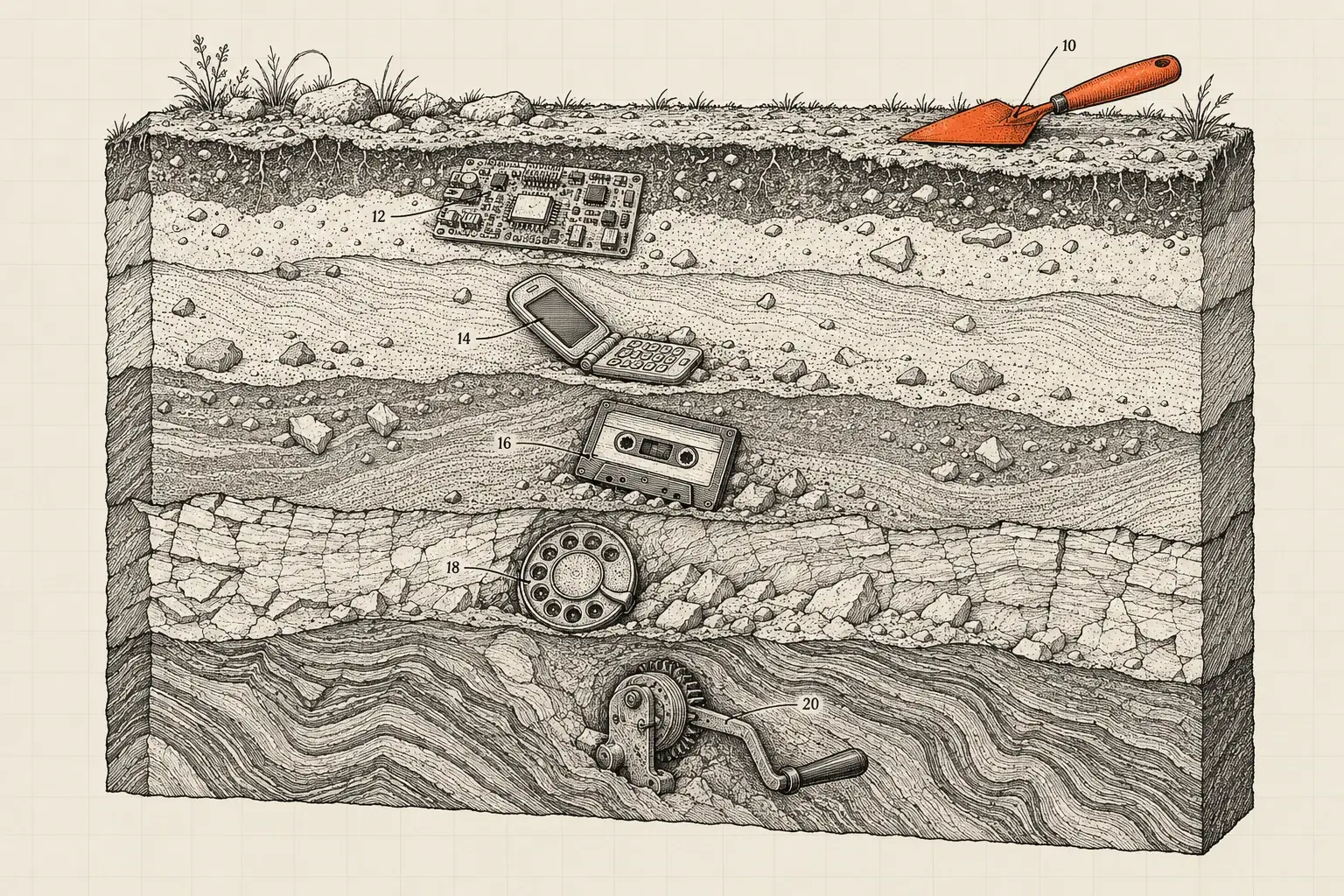
A quick prior art search is not meant to prove you are first. Its job is to tell you, cheaply and early, how crowded the ground around your idea already is, before you pay for drafting, prototypes, or marketing. Prior art is sedimentary: someone has almost always dug here before. The useful question is how close they came.
A Snapshot can point three ways. Sometimes the record is crowded, with references that cover the core of the idea. We say so plainly, and that answer can save you months and real money. Sometimes the ground is partly occupied: earlier work covers some features but not the combination you described, which gives you and your practitioner something concrete to discuss. And sometimes our narrow search turns up little. That is a reason to commission a fuller Patentability Search, not a reason to celebrate, because a Snapshot is deliberately limited.
An honest first look also protects you. The FTC warns that dishonest invention marketers hand out “positive” reports that are mass-produced and designed to sell more services. Our reports are allowed to disappoint you. That is what makes them useful.
§ 05 — Boundaries
What this is not
- Not a legal opinion on patentability. Whether to file, and what to claim, are questions for a registered patent attorney or agent.
- Not an exhaustive search. A Snapshot is deliberately focused; a Patentability Search goes much further.
- Not a clearance check. It does not tell you whether a product can be made or sold without running into someone else's patent.
- Not a forecast. We don't predict grants, sales, or licensing income, and we never will.
Metadragons LLC is not a law firm. We give you technical research, written in plain English, for review by you and your patent attorney or agent. See our scope and disclosures.
§ 06Questions
Questions inventors ask
Something else on your mind? Call (505) 357-5188 or write to info@metadragons.com.
What do I need to send?
A description in your own words, plus any sketches, photos, or notes. The most useful paragraph you can write explains what problem the idea solves and what makes your approach different. Keep confidential details out of the first e-mail; we sign an NDA before you share them.
How is this different from searching Google Patents myself?
Free tools such as Google Patents are a good place to start, and we encourage you to try them (here's how). The difference is method. We search patents and non-patent literature, expand through classifications and citations, read every candidate, and record exactly what we searched. A blank keyword search often means the words were wrong, not that the field is empty.
Will you tell me whether I can get a patent?
No. That is a legal judgment that only a registered patent attorney or agent can make. We tell you what the record shows, plainly. If the references look crowded, you will hear it from us before you spend more.
Is my idea kept confidential?
Yes. We sign an NDA before any technical disclosure. Files are handled in US-based systems, encrypted in transit and at rest, and never used to train AI models. On request, we delete your files within 30 days of project close.
What happens after the Snapshot?
Three common paths: stop or rethink the idea, commission a full Patentability Search, or take the Snapshot to a practitioner. If you don't have one, we can share a list of independent practitioners to contact. We receive no referral fees.
Who is the report written for?
You. The summary is written for the inventor, in plain English. The spreadsheet and audit trail are there for your attorney or agent, so they can check and extend the work.
Keep reading
Where to go next
§Next step
Get an honest first look
Tell us about the idea in general terms. After a free scoping call, you'll have a fixed-fee quote and our written disclosures within one business day.