Patent Drawings Cost: What Drives the Price and What the Market Charges
Published prices for patent drawings run from under $40 to about $200 per sheet. Here is what moves a quote, and the USPTO rules every sheet must meet.
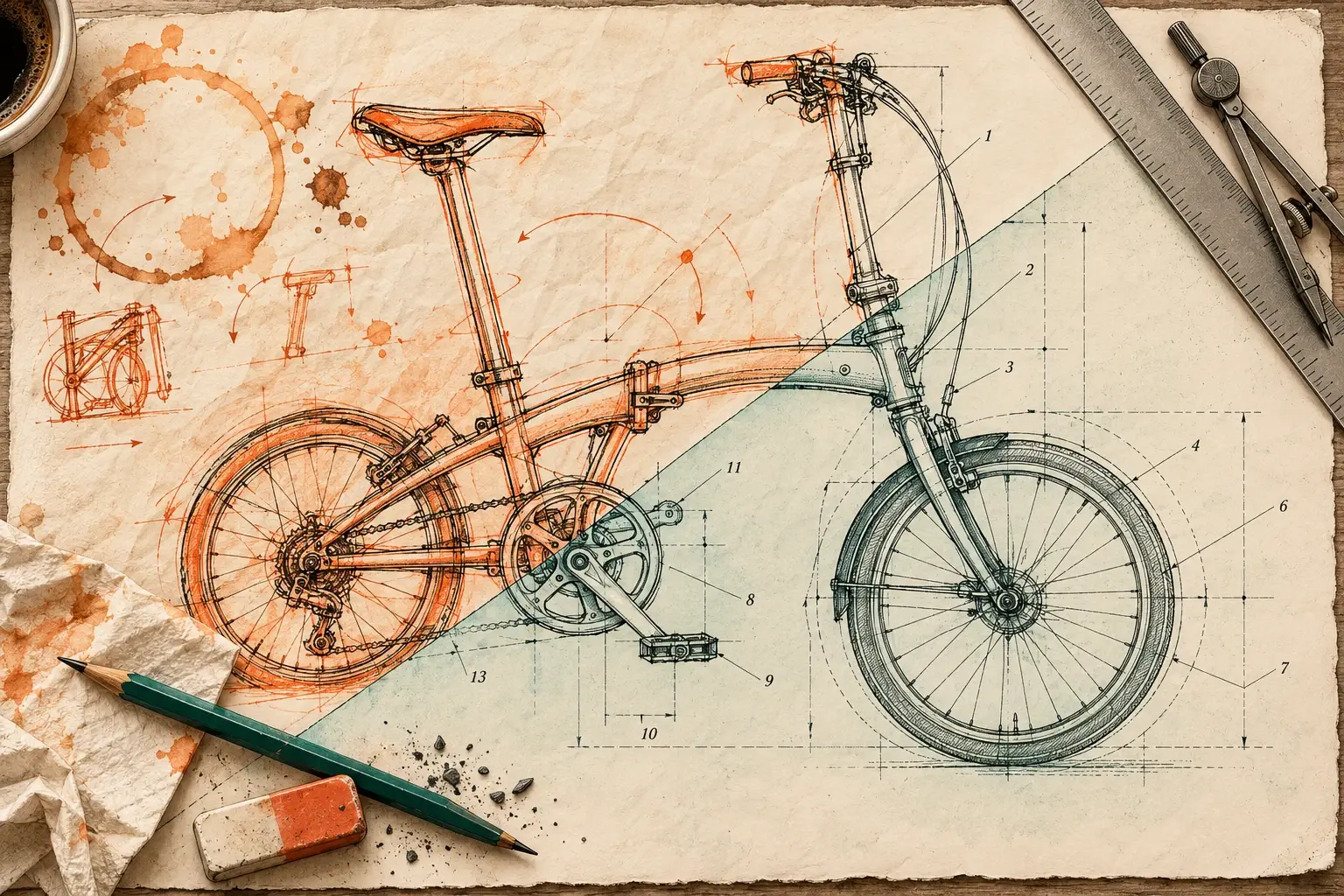
Published market prices for patent drawings run from under $40 per sheet at lower-cost vendors to $80–$200 per sheet at US drafting firms, and LegalZoom lists $399 for up to four sheets. Your actual patent drawings cost depends on six things: sheet count, complexity, the number of views, utility versus design, revisions, and how good your source material is. The cheapest quote is often not the cheapest outcome, because errors found later cost more to fix.
What the market charges
These are prices vendors publish on their own sites, gathered at the time of writing. Treat them as industry context, not quotes.
| Provider (published price) | Utility | Design | Revisions |
|---|---|---|---|
| Patent Drawing Experts (Menteso, Inc.) | $29 per sheet | — | Included |
| Menteso | — | $39 per sheet | Unlimited iterations |
| PatentDraw | $80–$150 per sheet | $100–$200 per sheet | Minor free; major $80 per hour |
| LegalZoom | $399 for up to 4 sheets; $100 per extra sheet | — | Not stated |
Two patterns stand out. Design work sits higher than utility work wherever both are priced. And the spread between the cheapest and most expensive published rates is roughly fivefold, which tells you that “a sheet” is not a standard unit of work.
A worked comparison
Here is a hypothetical utility application with eight figures on five sheets, priced from the published rates:
- At $29 per sheet: $145.
- At $80–$150 per sheet: $400–$750.
- At $399 for four sheets plus $100 for the fifth: $499.
A hypothetical design application with seven views on four sheets runs from $156 at $39 per sheet to $400–$800 at $100–$200 per sheet. None of these figures includes rework after an attorney’s review or an examiner’s objection.
The six things that drive cost
1. Sheets, figures and views
Vendors price by the sheet, the figure or the view, so ask which unit a quote uses. A sheet can hold several small figures, but 37 CFR 1.84 caps the usable area at 17.0 × 26.2 cm on A4 paper. A detailed figure may need a sheet to itself.
2. Complexity
Line density drives hours. A block diagram or flowchart is quick. A mechanical assembly with 40 reference numerals, an exploded view, and sectional views with hatching is not. Each reference character must be at least 0.32 cm (1/8 inch) tall, which limits how much detail fits on a sheet.
3. Number of views
A utility drawing shows the features the claims and description need. A design drawing must contain enough views to disclose the design’s complete appearance under 37 CFR 1.152. For a three-dimensional product, that typically means several elevation and plan views, and MPEP § 1503.02 suggests perspective views as well.
4. Utility versus design
In a design application the drawings are the claim. Solid lines show what is claimed. Broken lines show unclaimed environment and must be described as forming no part of the design. Shading should show the character and contour of surfaces where needed, and the MPEP requires oblique line shading for transparent, translucent and highly polished or reflective surfaces. Every view must agree with every other view. That consistency is why design sheets cost more. Interfaces and projected images add their own conventions; see our guide to design patent drawings for GUIs, AR and holograms.
5. Revisions
Ask how many rounds a quote includes and how a “major” revision is defined. Late changes are the expensive ones. Renumbering reference characters after the specification is written ripples through the figures and the text. Changes after filing are limited, so ask your practitioner before you rely on fixing drawings later.
6. Source material
The distance from sketch to sheet is what you are paying for. CAD files or clean photos of a prototype shorten that distance. A napkin sketch lengthens it. So does a list of figures that changes during drafting.
| Driver | Lowers the quote | Raises the quote |
|---|---|---|
| Source files | CAD models, photos, prior figures | Hand sketches only |
| Figure list | Fixed before drafting starts | Changes mid-project |
| Content | Flowcharts, block diagrams | Assemblies, sections, exploded views |
| Type | Utility | Design, especially many-view products |
| Revisions | Consolidated comments in one round | Piecemeal changes after review |
| Timing | Standard turnaround | Rush delivery |
USPTO drawing standards in brief
37 CFR 1.84 sets the format for every sheet. The main requirements:
- Ink and color. Drawings are normally black and white. Color is allowed in design applications. In utility applications it needs a granted petition, and the 37 CFR 1.17(h) petition fee is $150, $60 or $30 depending on entity size.
- Photographs. Not ordinarily permitted. They are accepted only where they are the only practicable medium, such as gels, blots or tissue cross-sections.
- Sheet size. All sheets must be the same size: 21.0 × 29.7 cm (A4) or 21.6 × 27.9 cm (8½ × 11 inches).
- Margins. At least 2.5 cm at the top and left, 1.5 cm at the right, and 1.0 cm at the bottom, with no frames.
- Scale. Drawings must stay clear when reduced to two-thirds size. Notes such as “actual size” are not permitted.
- Lines and shading. Lines must be clean, black and uniformly thick. Light comes from the upper left at 45°. Solid black areas are not permitted except in bar graphs or to represent color.
- Numbering. Views are numbered FIG. 1, FIG. 2 and so on. Sheets are numbered at the top center in the form 1/3, 2/3.
- Sectional views. The cutting plane is shown with a broken line and arrows. Hatching runs at a substantial angle, preferably 45°.
Design drawings follow these rules plus 37 CFR 1.152, which also bars combining photographs and ink drawings as formal drawings in one application.
How to get an accurate quote
- Say whether it’s utility or design, and send any draft claims or description.
- Send source files: CAD, photos, or existing figures.
- List the figures you expect, with views and any sections or exploded views.
- Provide reference numerals if your practitioner has assigned them.
- Say whether you’ll need color or photographs.
- State your deadline and how many revision rounds you need.
- Ask what unit the price uses (sheet, figure or view) and what counts as a major revision.
Where cheap drawings get expensive
A low per-sheet rate is a good deal only if the sheets work the first time. Here is where the savings tend to leak away.
- Rework after review. Your attorney or agent reads the figures against the claims. A missing feature or a numeral that doesn’t match the text means another round, billed or not.
- Examiner objections. Drawings that break 1.84 can draw an objection. That means replacement sheets and more practitioner time, which usually costs more than the drafting did.
- Inconsistent design views. If one view in a design set doesn’t match the others, the problem goes beyond looks, because the drawings define the claimed design.
- No source files. Continuations, foreign filings, pitch decks and licensing packets all reuse the same figures. If the vendor keeps the source files, you pay to redraw them later. Ask for editable files at the start.
- Rules that differ abroad. Plans can change. 37 CFR 1.84 notes, for example, that color drawings are not permitted in international (PCT) applications. Black-and-white line work travels further than color or photographs.
The useful comparison is total cost per accepted figure, not price per sheet. Ask each vendor what happens, and what it costs, when a figure has to change.
This article is general information, not legal advice.
How Meta Dragons can help
Our Utility Patent Drawings service delivers first proofs in 3–5 business days, and Design Patent Drawings in 4–6 business days. Every drawing set comes as a USPTO-format PDF, with source files on request, and two revision rounds are included. We send a fixed-fee written quote within one business day of a free scoping call, and nothing is billed beyond it without your written approval. If you’re still budgeting the whole application, our guide to prior art search cost covers the step that usually comes first.
Sources
- 37 CFR § 1.84 — Standards for drawings — Cornell Law School LII
- 37 CFR § 1.152 — Design drawings — Cornell Law School LII
- MPEP § 1503.02 — Drawing — USPTO
- USPTO fee schedule — USPTO
- Professional patent drawings — LegalZoom
- Pricing policy — PatentDraw
- Utility patent drawings — Patent Drawing Experts
- Design patent drawing service — Menteso
This article is general information about patent research and the patent market. It is not legal, financial or investment advice. Meta Dragons is not a law firm; for legal questions, consult a registered patent attorney or agent.